20210818

I did it!

On our last visit to Devon and whilst researching running or biking trails I came across the Tarka Trail, or was it Tarka Trial? At 30 miles it is one of the country's longest continuous traffic-free walking and cycling paths. And I determined at some unspecified time to do at least its southern 26 miles. And so, armed with the loan of J's bike and adequate clothing and supplies of food and water, I took the plunge and set out yesterday at 06:00.

My track in OpenTopoMap

You can follow my track in detail by downloading my track GPX file, opening a the link to OpenTopoMap, clicking the GPX button at top left and selecting the file. You can then zoom in/out and interactively follow the route via the mouse in the elevation profile. On a slow connection the underlying map may take a while to load, and the OpenTopoMap server appears to be designed to slow down if you request too many map tiles.

Or, in brief the track was 42.8 miles to get to the southernmost end of the trail, 26 miles of traffic free trail, and then home via the very busy North Devon Link road A361, a total of 106.7 miles, elevation gain 2054m, average speed moving 10.7 mph. The trail boasts two tunnels and numerous bridges under roads and over rivers, mostly existing but one bridge built especially for the trail.

first segment, courtesy Google Maps

The outward journey was selected by Google Maps with the bicycle option and was enjoyable - very little traffic, mostly side-roads including one segment of footpath. The Tarka Trail itself was delectable. It mostly follows former dismantled railway lines so the gradients are gentle. Initially quiet of Other People, the closer I got to Bideford the busier it became with a significant proportion of walkers as well as bikers, and of children whose riding skills were questionable.

The return journey via the A361 was gruelling, but then I expected no better. Never was anyone so glad to see the little houses of Tiverton perched on their hillside, and then to negotiate the roundabout where I left the A361.

The first village on my outward journey was Brithem Bottom. I'm not sure what was special about his, but on my return mine was, and still is, well imprinted with bicycle saddle. Another random observation was about Barnstaple, the termination of the Tarka Trial as far as I was concerned (the traffic free part does go a bit further north to Braunton Burrows and it would have been cool to go that far but, really...). Bideford and all before it was delightful. The locals had obviously tried to make the trail an experience in dressing up the old stations, adding Interesting Things to do or look at, and providing coffee shops and the like. And besides, Bideford is, in my childhood memories, the gateway to Westward Ho!

But between Bideford and Barnstaple the experience dwindled until at Barnstaple the Braunton route tacitly veered off across the bridge over the river Taw leaving those that didn't go that way with a quandary. Local inhabitants appeared to have interest only in giant Asda and Tesco Extra mega-stores and when I asked several passers-by how I might get from where I was to the A361 their response was a mixture of incredibility that anyone should want to bike to Tiverton at all, and ignorance as to the basic geography of the place. Oh, and my own chosen route had been over a foot bridge that had been closed, seemingly permanently. I had intended to take my picnic lunch on a suitable patch of lush grass at the Barnstaple end of the trail, but as no such patch existed I ended up in a noisy layby on the A361 out of town. No, Barnstaple is not the place for outside people like me. 

Here is a link to my photo album for those that cannot zoom in on the following.


first mention: a non-cycle part of Tarka near Dolton

Start of the cycle Tarka trail at Meeth

The old station at Meeth

Example of wayside interests

Example of frequent wayside sculptures

A former railway station

The new bridge over the river Torridge

River Torridge

Torrington station

The longer of two tunnels at Landcross

Girder bridge over the Torridge estuary

Looking back on same

The same

Ruin across the Torridge

First sight of Bideford

Bideford railway station that was

View across road bridge over Torridge

Ship wreck north of Bideford

Somewhere near Appledore

Mud flats between Bideford and Barnstaple


20210815

Culm source again and Wellington to boot

It's Sunday afternoon and J's bike is luring me so I set off to find the source of the river Culm. On our last visit I had failed to go far enough to find it so this time I was more determined - I went far enough but still failed to find it. After all it's probably only a dribble in some farmer's field. In case you're interested it is somewhere in that triangle at furthest right that is just off the map.


My track 30.9 miles 664m height gain


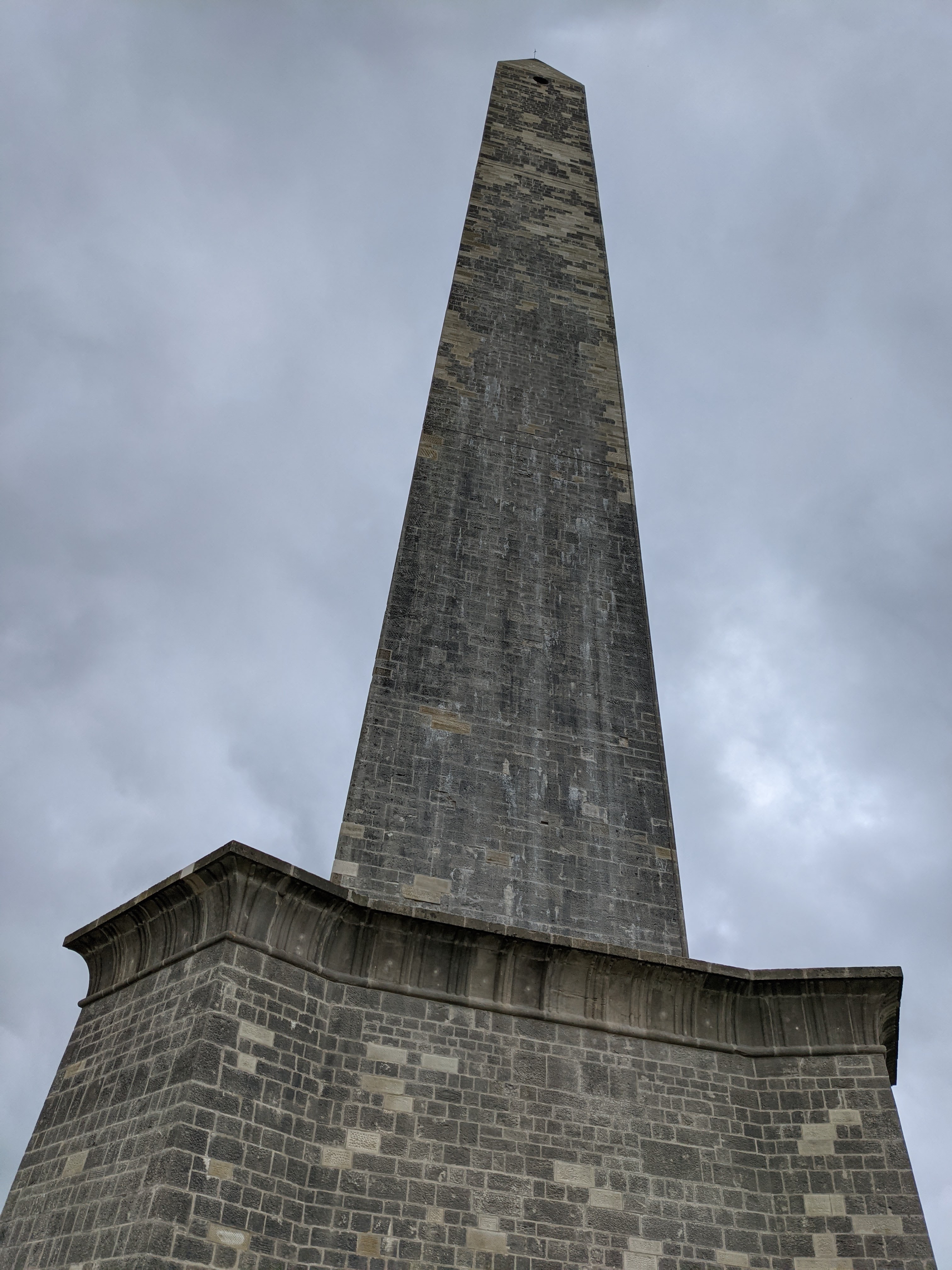
My return route was chosen to minimise height variation and take a look at the newly restored Wellington monument (top centre on map). I was a little disappointed - the restoration work is not yet complete, the monument is still surrounded with ugly high metal fencing, and the place was swarming with Other People. Still, they have removed all the scaffolding and have done a good job repointing and replacing weathered stones. For me restoration should include the ability for Joe Bloggs to climb to the top and look out of those enticing windows.


20210814

Red, white and blue balls

 If you take the A38 from Willand to Wellington you will pass signs for Red Ball and for White Ball. Although these are now place names they really refer to two hills.  One is made of white sandstone and the other of red, and apparently "Ball" means a small hill. And there's a Blue Ball Inn in Sampford Moor just off the right hand side of my map - doubtless they wanted to get in on the band-waggon.


So I cycled to the start of a footpath, then hiked, hoping to take photos of the the Thing of Interest, namely the White Ball railway tunnel. Isambard Kingdom Brunel was the chief engineer responsible, indeed he was for the whole route down from Bristol including the famous bridge over the river Tamar which has fascinated me since childhood. Incidentally the bridge carries only a single track with a severe speed restriction of 15 mph.

Royal Albert bridge over Tamar (stock photo)

I had hoped the footpath, that must at some point cross directly over the tunnel, might reveal a ventilation shaft or at least get me close to the tunnel mouth but alas neither were forthcoming. But the history is worth checking out if you love railways as I do. Can you imagine one thousand men with shovels and wheelbarrows who created the cuttings and tunnel? And their effort is still with us, conveying the main line from Paddington to Penzance.

Here is a stock photo taken when they removed all vegetation in 2009, followed with my own photos. Quite a lot of growth since then!

White ball tunnel mouth 2009 (stock photo)


Beginning of footpath

Here it joined a corn field, note...

...the Wellington monument on the horizon

Standing directly over the tunnel looking North

The mouth is down there somewhere

I tried in vain to negotiate the undergrowth

but eventually found this vantage point

Again directly over the tunnel

The last photo was taken on the way back, nearer the top of White Ball hill. If you look carefully near the centre of the photo (you'll need to click to enlarge it) you will see the yellow front of a down-line train about to enter the tunnel.

20210812

I found a gem!

OpenTopoMap is the best free mapping service for hiking and cycling that I have found, but it gives no indication of whether a path is a right-of-way. In contrast UK Ordnance Survey maps do show right-of-ways e.g. here and I include an excerpt below for comparison, moreover this site is devoted to showing them. 

My track 12.6 miles


The gem, in OpenTopoMap


Same area in Ordnance Survey 1:25000

So, I headed north along the Tiverton Parkway cycle route and found the entrance to the "gem" between the station car park and the small pond.  This path is omitted on the Ordnance Survey and FPM maps because it is a "permissive path" and not a right-of-way, and yet the land owners have done an amazing job: lush cut grass underfoot, occasional areas with picnic tables, and appropriate well maintained fencing and gates.

Check out my photos below. Click on any of the images to zoom in. 

Note the GWR up and down trains passing...

...in the near distance

No, I didn't ingest any without relizing (sic) it!

This right-of-way crossed someone's garden

I followed this typical Devon road

View from highest point

 And on the way back I checked out that elusive footpath at Whitnage.

20210809

Two satisfying Willand runs

Running barefoot through grassy meadows is hard to beat, and my first run this session satisfied. Through my favourite Culm river water meadows from Culmstock to Uffculme, just under 12 miles including getting there and back.

Culm water meadows

My second entailed running barefoot through grassy meadows in summer rain and getting soaked, an experience which is even harder to beat. The grassy bit started and finished in Uplowman (at bottom left in my map), going north past "Wood" to "Murley Farm" then south-east over the hill "Gulmoor" to Whitnage then heading west. Virtually all of this was through grassy meadows with not a soul about. Just under 13 miles including getting there and back.

Uplowman paths

At Whitnage I had intended to strike the road but could not find the right-of-way, so ended up returning west to Uplowman. From Lowman Cross (top left in next map) I headed home-ward south and over the major road A361 then took the footpath east to Sampford Peverell only to find it had been re-routed due to an "incident" over Connigar Hill where it joined the marked footpath above "Boobery" on the map. I desperately wanted to know what the "incident" entailed... From Stampford I took my usual route via Tiverton Parkway railway station back home.

Connigar Hill

Here are some photos

Inquisitive cows in Culm meadows

Near Murley Farm

View from summit near Gulmoor

Where the path was re-routed

From Connigar Hill

Stampford Peverell


Why doubt is necessary

It is all too easy to look critically at Christian "faith" (and perhaps this holds for other beliefs too) as in the existence of God, etc. cannot be proven and therefore must be accepted by "faith". And then to go back a further step and interpret "faith" as a euphemism for imagination. So that in the hymn:

Lord, lift me up, and let me stand
By faith on Canaan’s tableland;
A higher plane than I have found,
Lord, plant my feet on higher ground.

the "tableland" is to be attained only in the imagination of the believer and by a process not dissimilar to self hypnosis. But surely this must not be, or if it is I want nothing of it. It would be no better than what my father called "shamrock tea" - made with only three leaves and so weak. 

I rather like James' "But someone will say, 'You have faith and I have works.' Show me your faith apart from your works, and I will show you my faith by my works..."

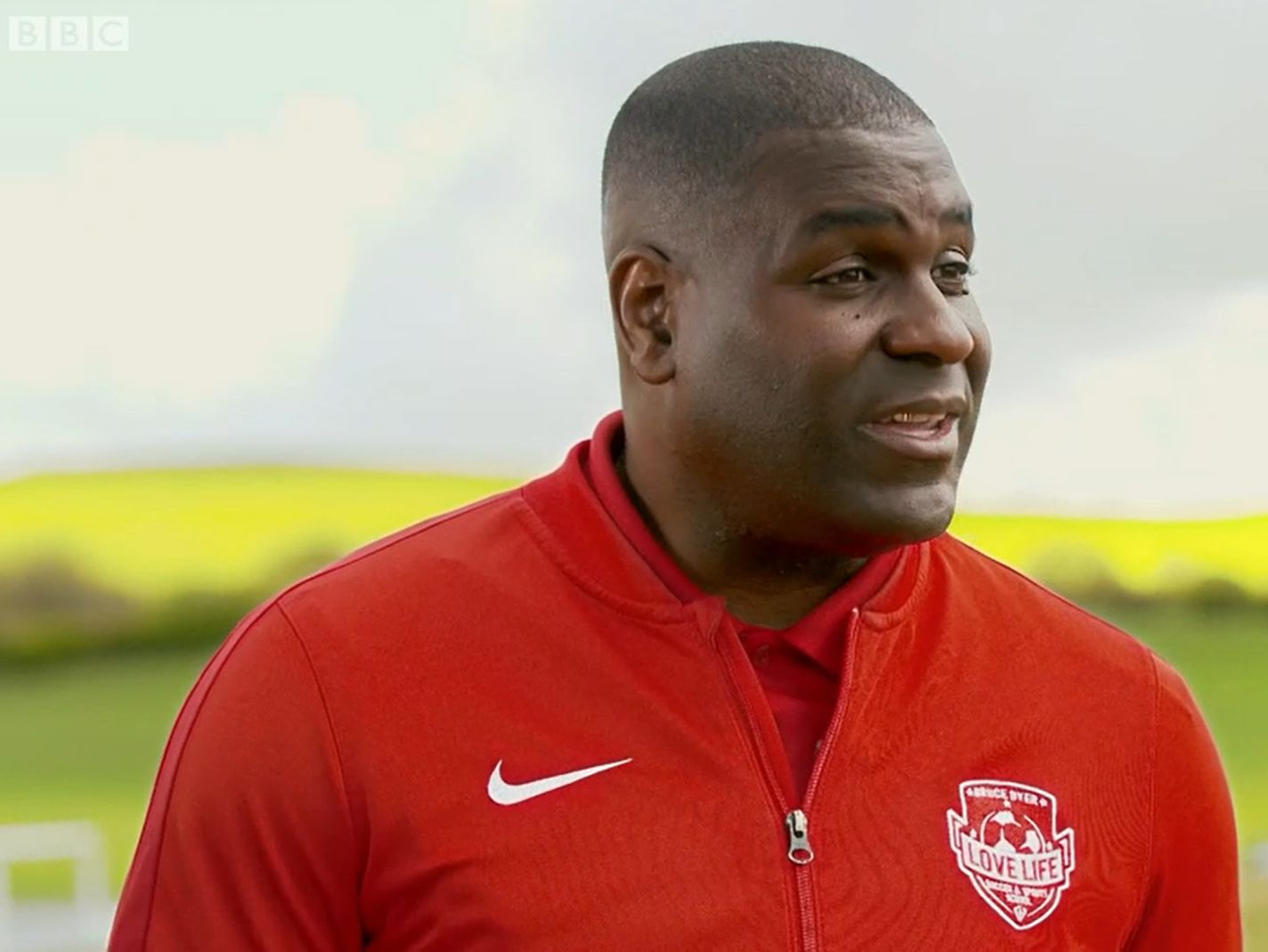
We're at great grandma's at the moment so get to watch a lot of TV.  In "Songs of Praise" today a Salvation Army member sets up a School Uniform Bank to help parents struggling to pay for expensive school uniforms, and former Premier league player Bruce Dyer buys land for his vision to teach youngsters soccer skills. Neither of these "works" is what some would call "spiritual" and yet, by their own testimony, each are things they believed God was wanting them to do. And certainly both were touching people's lives. Fair play to them, as we say in Ireland. 

And here's me continuing to doubt. But it occurred to me that, if there were no doubting, there would be no need for faith. So then "faith" becomes the bridge from doubting to reality and to doubt is an essential first step.

Apply this to the well-known preacher's picture of faith: of sitting on a chair. The question does not arise if the protagonist is oblivious to the possible weakness of the chair. It is only for those who take the moment to assess whether the chair will hold them up that "faith" becomes necessary as the mechanism to take them from doubt to stability.

So perhaps my doubt is not terminal?


20210807

Fiducial?


I recently joined the youngsters in watching Disney's latest offering Raya and the Last Dragon. I loved the beautiful virtual scenery and generally enjoyed the plot and noted the morals. This review pointed out that it was refreshing to have the heroin Raya depicted with fatal flaws from the outset. The theme throughout the movie is the need for trust even when it demands the ultimate sacrifice. For a quick synopsis see here

The rest of this post is substantially what I posted a few weeks ago but then withdrew for further editing. It felt like I was handling dynamite, even if my desire was only to speak plainly about my misgivings. By writing as I do, I hope that, just possibly, my experience might resonate for some reader and, by knowing that they are not alone, bring encouragement. There are two things going on: my own personal struggle, and that in the context of the church community in which I live.

Fiducial: from the Latin fiducia ‘trust’: a standard of reference, founded on faith or trust. After identifying the two or more fiducial marks on the artwork of a printed circuit board (PCB), an automatic pick'n'place assembly robot can determine the PCB's exact position and orientation and thus populate its component parts precisely. Those tiny but readily identifiable marks are thus the basic of trust.

Three fiducials (stock photo)

Revelation: Greek á¼€Ï€Î¿ÎºÎ¬Î»Ï…ψιν apokalupsis: uncovering, unveiling, disclosure: principally used of the revelation of Jesus Christ, especially a particular manifestation previously unknown... By inference revelations come via unexpected (e.g. supernatural) channels.


Divine impartation, recognition, revelation?

In Michelangelo's fresco God's finger is not actually touching Adam's. A father who does not physically touch his son. And there's the rub. If only I, you, we could touch or be touched by God tangibly and know assuredly. But he is spirit and we are mere flesh: chalk and cheese, oil and water. And yet John claims that God so loved the world and that we have heard, which we have seen with our eyes, which we have looked upon, and our hands have handled. But I am not John and anyway that was a while ago. Where, for me, are the fiducial marks?

In the book of Hebrews "Hall of Faith" we read that without faith it is impossible to please him, for whoever would draw near to God must believe that he exists and that he rewards those who seek him. This circular reasoning is the sort of thing atheists build castles on, whilst theists conclude that by reasoning alone man cannot attain to God. Which is all very well but wasn't it God who, dangling the carrot, first instilled what we now call rationale in mankind?

Baron Munchausen bootstrapping

Folk who too easily claim that God has revealed to them this or that make me suspicious. And yet, perhaps without revelation we humans cannot rise above the limitations of our carnal reasoning which, at best, follow endless logical rabbit trails. The callous assertions of Big Bang or unassisted evolution presented as gospel truth being examples. Argumentum ex culo and the Münchhausen trilemma. Perhaps what we call logic, valuable as it may be within the sphere of humanity, just isn't up to arguing the existence of God?

Like I said in a previous post - there can be no (rational) conclusion. Even so, for me the Puddleglum argument, though weakened, still holds. And that's why I am currently still rather precariously clinging onto what he calls his play-world whilst continuing to search for fiducials.

Mind you, there are some examples fiducials in the Bible: the annual feast of Passover to remind the children of Israel of their miraculous deliverance from Egypt; Samuel's Ebenezer stone which was to remind them that Hitherto hath the LORD helped us; the feast of Purim in the book of Esther that these days should be remembered and kept throughout every generation, every family, every province, and every city.  And of course Paul argues that the visible creation itself is an undeniable fiducial unless one convinces oneself otherwise.

I suppose the celebrations of Christmas and Easter were meant to be modern day fiducials but sadly their association has become lost in commercialisation for most folk. Nevertheless the dating terms BC and AD irrevocably point to the birth of Jesus Christ even if the early church made some errors on the exact dates and mixed them up with pagan festivals, and even though modern man tries expunge all such references with the replacement terms CE and BCE.

Some while ago I posted about a boy we know with leukaemia. His condition has been stabilised by drugs and the family are enjoying every extra day they have with him in reasonably normality. But the "forever healing" they and I have been asking for hasn't yet been confirmed, indeed I am not even sure how the medical profession could confirm it. But I'm still praying for his forever healing, still feeling that lump in my throat when I think of him, still keep asking the Eternal to "show yourself to me". And so I come back to, like Raya, will I still trust even though I might never see a fiducial that satisfies my intellect?

And then there is my context in the community where I live, a group of over thirty souls living and worshipping in close contact with each other with all (well, some) things in common. An underlying premise is that each member should hear God and obey. Which is all very well if only one could, or at least if only one could disentangle the ruminations of one's own mind. So in the absence of so doing one can end up either as a rebel or as a man pleaser.  


We have been using a cherry picker to paint our rather large residence. It's kind of scary that the basket can hold two adults and, at full extent, is counterbalanced only by the weight of the base unit. And kind of scary when it swings from side to side. One tells oneself that this machine was designed by capable engineers with due regard for safety so that it cannot topple over. An example of fiducial and trust - but certainly not blind trust.


20210617

Camaderry

My track 13.8 miles, average 2.2mph, gain 792m

This is a commentary on my Google album by the same name.

I biked to my starting point where St Kevin's Way crosses the Asbawn Brook, at the end of L8530. I followed St Kevin's Way up and over the Wicklow Gap, hence pictures of Kings River and a footbridge over same where it has dwindled to a mere stream.

I left the Way (there's a picture with the Way marker) to climb Camaderry East Top via the old lead mines. On the way I passed the controlled outflow via conduit from the lower reservoir of the Turlough Hill pumped storage scheme: picture with warning sign. There's a picture of what was a mine adit in the mining area. The track is good all the way and agrees with OpenTopMap. 

I took pictures from the East Top thence to Camaderry proper. Between here and Turlough Hill I enjoyed a quick lunch and was overtaken by a party of seven. They left me to descend by the ESB access road to Wicklow Gap, whilst I went on to beautiful Lough Firib. By this time I had dinged two toes, using insulation tape to bandage them. Hiking barefoot has its challenges as well as its rewards. From Lough Firib to Art's Cross and then down into the glen and back to base.

Formerly I have descended beside the stream - one gets wet but the route is fairly direct even if not "official". This time I thought I would follow the track marked in OpenTopoMap which first crosses the brook and then circles around before descending. Unfortunately this track is decidedly lacking in substance, although I had followed similar tracks successfully up until then.  I ended up clambering through thick heather which is always a bit scary because of the possibility of deer ticks. And I saw (and heard) plenty of deer.


A very significant time

The Coronation of Elizabeth II took place on 2 June 1953 at Westminster Abbey in London. She acceded to the throne at the age of 25 upon the death of her father, George VI, on 6 February 1952.

Although the very first transistor was created in the lab towards the end of 1947, production didn't start until 1951 and the first application to hit the masses, the transistor radio, was demonstrated in August 1953.

Cradled somewhere amongst those very significant dates the Irish Dodo was born,. He has seen the Queen continue her duties into her 95th year as the longest serving British monarch, and seen 50 years of Moore's law obeyed (that the number of transistors in an integrated circuit aka silicon chip should double every two year) so that last year 2.6 trillion transistors were integrated into a single integrated circuit to create a deep learning engine called the Wafer Scale Engine 2.

Back then such advances could not be countenanced. Check out this video The Transistor: a 1953 documentary, anticipating its coming impact on technology with the possibility that, using transistors, a computer might then be small enough to fit into an average room. Little did they know.


What marvels will my grandchildren see and enjoy?  Assuming things continue as they have these last 60 or so years. Things that we cannot even now imagine? A tower of Babel?