I remote teach maths to an eight-year old home-schooled girl who lives the other side of the mountains. Let's say her name is Beth.
Beth is a delightful girl with a great sense of humour, full of sparkle, fun and mischief but not so full of maths. She is not "girl-ish" i.e. is not all about clothes and dolls. She treats me (and I try to treat her) as an equal albeit her teacher. In anything other than maths we get on remarkably well.
She has a constant undercurrent of fun, machinations, anecdotes that hardly gives her time to engage in simple maths. And yet she is not numerically clueless - often it seems that a maths question or method I pose is either beneath her dignity to comment on, or else after a short pause she concludes "I don't know". Period. No matter how I turn the concept around, once she has decided it is too hard that's it. So I quickly change the subject hoping so doing to re-engage her attention...
It is not a secret that I am struggling with my Christian "faith". But I am still open for input; searching if you will. Struggling, but not given up. I find my own experience is not dissimilar to Beth's. I'm reading the book of Ezekiel at the moment (as one does) and have got to his temple vision. What does this mean, what relevance has it for me? I try commentaries and search the internet and nothing that I find helps my understanding appreciably. Along with many other things I again have to admit to myself: "I don't know". Even as I write these words I can picture Beth's face as she utters these words - two trains of thought: this one stops there point blank, the other continues as if nothing untoward has occurred - like, "what's this under my desk?" (she pulls out and starts to play with a ball of Blue-Tack) or "I'm going to give you a surprise" (get's paper and pencil and shifts the camera so that I cannot she her writing) - minutes pass and eventually she holds up her priceless work of art... Her latest taunt is "maths is so boring".
I've come to love Beth - the maths question, however, remains unanswered.
It is all too easy to look critically at Christian "faith" (and perhaps this holds for other beliefs too) as in the existence of God, etc. cannot be proven and therefore must be accepted by "faith". And then to go back a further step and interpret "faith" as a euphemism for imagination. So that in the hymn:
Lord, lift me up, and let me stand
By faith on Canaan’s tableland;
A higher plane than I have found,
Lord, plant my feet on higher ground.
the "tableland" is to be attained only in the imagination of the believer and by a process not dissimilar to self hypnosis. But surely this must not be, or if it is I want nothing of it. It would be no better than what my father called "shamrock tea" - made with only three leaves and so weak.
I rather like James' "But someone will say, 'You have faith and I have works.' Show me your faith apart from your works, and I will show you my faith by my works..."
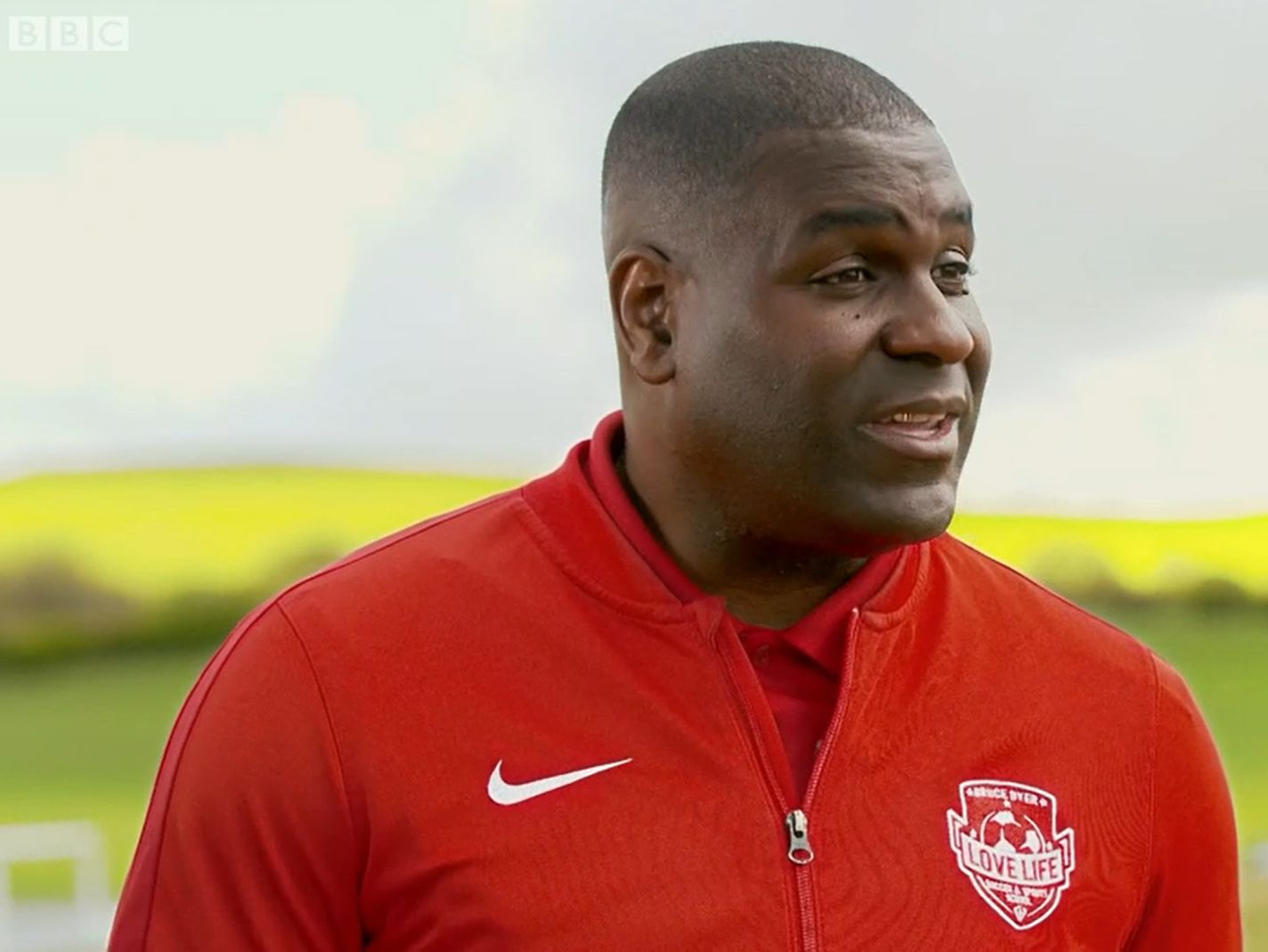
We're at great grandma's at the moment so get to watch a lot of TV. In "Songs of Praise" today a Salvation Army member sets up a School Uniform Bank to help parents struggling to pay for expensive school uniforms, and former Premier league player Bruce Dyer buys land for his vision to teach youngsters soccer skills. Neither of these "works" is what some would call "spiritual" and yet, by their own testimony, each are things they believed God was wanting them to do. And certainly both were touching people's lives. Fair play to them, as we say in Ireland.
And here's me continuing to doubt. But it occurred to me that, if there were no doubting, there would be no need for faith. So then "faith" becomes the bridge from doubting to reality and to doubt is an essential first step.
Apply this to the well-known preacher's picture of faith: of sitting on a chair. The question does not arise if the protagonist is oblivious to the possible weakness of the chair. It is only for those who take the moment to assess whether the chair will hold them up that "faith" becomes necessary as the mechanism to take them from doubt to stability.
I recently joined the youngsters in watching Disney's latest offering Raya and the Last Dragon. I loved the beautiful virtual scenery and generally enjoyed the plot and noted the morals. This review pointed out that it was refreshing to have the heroin Raya depicted with fatal flaws from the outset. The theme throughout the movie is the need for trust even when it demands the ultimate sacrifice. For a quick synopsis see here.
The rest of this post is substantially what I posted a few weeks ago but then withdrew for further editing. It felt like I was handling dynamite, even if my desire was only to speak plainly about my misgivings. By writing as I do, I hope that, just possibly, my experience might resonate for some reader and, by knowing that they are not alone, bring encouragement. There are two things going on: my own personal struggle, and that in the context of the church community in which I live.
Fiducial: from the Latin fiducia ‘trust’: a standard of reference, founded on faith or trust. After identifying the two or more fiducial marks on the artwork of a printed circuit board (PCB), an automatic pick'n'place assembly robot can determine the PCB's exact position and orientation and thus populate its component parts precisely. Those tiny but readily identifiable marks are thus the basic of trust.
Three fiducials (stock photo)
Revelation: Greek ἀποκάλυψιν apokalupsis: uncovering, unveiling, disclosure: principally used of the revelation of Jesus Christ, especially a particular manifestation previously unknown... By inference revelations come via unexpected (e.g. supernatural) channels.
Divine impartation, recognition, revelation?
In Michelangelo's fresco God's finger is not actually touching Adam's. A father who does not physically touch his son. And there's the rub. If only I, you, we could touch or be touched by God tangibly and know assuredly. But he is spirit and we are mere flesh: chalk and cheese, oil and water. And yet John claims that God so loved the world and that we have heard, which we have seen with our eyes, which we have looked upon, and our hands have handled. But I am not John and anyway that was a while ago. Where, for me, are the fiducial marks?
In the book of Hebrews "Hall of Faith" we read that without faith it is impossible to please him, for whoever would draw near to God must believe that he exists and that he rewards those who seek him. This circular reasoning is the sort of thing atheists build castles on, whilst theists conclude that by reasoning alone man cannot attain to God. Which is all very well but wasn't it God who, dangling the carrot, first instilled what we now call rationale in mankind?
Baron Munchausen bootstrapping
Folk who too easily claim that God has revealed to them this or that make me suspicious. And yet, perhaps without revelation we humans cannot rise above the limitations of our carnal reasoning which, at best, follow endless logical rabbit trails. The callous assertions of Big Bang or unassisted evolution presented as gospel truth being examples. Argumentum ex culoand the Münchhausen trilemma. Perhaps what we call logic, valuable as it may be within the sphere of humanity, just isn't up to arguing the existence of God?
Like I said in a previous post - there can be no (rational) conclusion. Even so, for me the Puddleglum argument, though weakened, still holds. And that's why I am currently still rather precariously clinging onto what he calls his play-world whilst continuing to search for fiducials.
Mind you, there are some examples fiducials in the Bible: the annual feast of Passover to remind the children of Israel of their miraculous deliverance from Egypt; Samuel's Ebenezer stone which was to remind them that Hitherto hath the LORD helped us; the feast of Purim in the book of Esther that these days should be remembered and kept throughout every generation, every family, every province, and every city. And of course Paul argues that the visible creation itself is an undeniable fiducial unless one convinces oneself otherwise.
I suppose the celebrations of Christmas and Easter were meant to be modern day fiducials but sadly their association has become lost in commercialisation for most folk. Nevertheless the dating terms BC and AD irrevocably point to the birth of Jesus Christ even if the early church made some errors on the exact dates and mixed them up with pagan festivals, and even though modern man tries expunge all such references with the replacement terms CE and BCE.
Some while ago I posted about a boy we know with leukaemia. His condition has been stabilised by drugs and the family are enjoying every extra day they have with him in reasonably normality. But the "forever healing" they and I have been asking for hasn't yet been confirmed, indeed I am not even sure how the medical profession could confirm it. But I'm still praying for his forever healing, still feeling that lump in my throat when I think of him, still keep asking the Eternal to "show yourself to me". And so I come back to, like Raya, will I still trust even thoughI might never see a fiducial that satisfies my intellect?
And then there is my context in the community where I live, a group of over thirty souls living and worshipping in close contact with each other with all (well, some) things in common. An underlying premise is that each member should hear God and obey. Which is all very well if only one could, or at least if only one could disentangle the ruminations of one's own mind. So in the absence of so doing one can end up either as a rebel or as a man pleaser.
We have been using a cherry picker to paint our rather large residence. It's kind of scary that the basket can hold two adults and, at full extent, is counterbalanced only by the weight of the base unit. And kind of scary when it swings from side to side. One tells oneself that this machine was designed by capable engineers with due regard for safety so that it cannot topple over. An example of fiducial and trust - but certainly not blind trust.
A year or so ago Ali and I enjoyed a weekend get-away in Co. Wexford. We stayed at a hotel which had been recommended to us. The dinner menus at this hotel were curious and not my cup of tea. Like "served on a bed of..." and when the plate came the only food of substance seemed to be that of the "bed" but on closer inspection and taste I can only surmise it was not intended to be eaten. One of the "puddings", and one I chose in distress nothing else appearing palatable, was "pavlova deconstructed". When the desert came it contained one or two very small blobs of meringue, a few berries, perhaps half a strawberry and a small splodge of cream. And the usual ridiculous "jus" patterns on the considerable void of the rest of the otherwise empty plate. I was not impressed. Why should one pay more for eating less?
I used this story in the "opening" aka "devotion" I gave earlier this week adding that, at present, I feel like what I thought was my "faith" is under deconstruction. I went on to expose false ideas of what it means to "believe". As an example I explained how I had recently set a ladder on the tin roof and against our boiler's chimney which is no more than a steel pipe. I wanted to clean the flue. I had evidence gained from experience that the set-up would take my weight, but I could not be sure until I committed myself to climbing it. The bridge between the necessary evidence and the outworking I identified as "belief" or "faith". The evidence and the outworking were two essential ingredients but they did not meet in the middle.
I explained that, quite apart from anything Christian, the human psyche could be strongly affected by what we believe, citing medical examples of remarkable restorations to health just because the patient believed a treatment, even a placebo, would do the trick.
I thought I made it clear that much of what I, and doubtless we, call "belief" in Christianity is wishful thinking or confirmation bias. I was nervous saying this because I thought I might be ousted!
The curious thing is that, although several folk thanked me for sharing, no-one made any reference to my apostasy. Which was all very curious.
And then to cap it all, after the evening meal desert was do-it-yourself-deconstructed-pavlova. Only this time the quantities were right!
I've always thought the advice to the Philippian jailer was over simplistic when he said: Sirs, what must I do to be saved? And they said, Believe on the Lord Jesus Christ, and you will be saved. To give credit, the Greek pistis "belief", often translated "faith", includes the idea of wholly putting one's trust in something or someone. Whereas the modern English "belief" is sometimes much weaker as in "I believe it is going to rain this afternoon". So the above might better read "Put your trust wholly in the..."
One of our diesel vehicles had inadvertently been topped up with petrol (maybe 50% mix). I did not realise this until well on the way to Dublin to take Ali to an appointment. The engine ran lumpy but we got there, turned the engine off and did what we came for, but then I couldn't start it again. I got talking to the guy who we called out to drain the tank and we started discussing religion. He claimed to be a humanist atheist and said he believed only what he could see proof for, which definitely didn't include God. But apparently it did include some very wacky things like UFO's and life on other planets and the Jesus story being no more than a rehash of the Egyptian god Horus and did I know that Jesus condoned killing his enemies? When I got home and checked up on his points it quickly became apparent that there was a good deal less proof for his ideas than my Christian ones. But he was not the kind of gent that would be easily persuaded against his will and I'm not much use in debating (my brain works too slowly). So we parted company each wondering how the other could possibly believe what he claimed.
Rachel Nuwer argues that the reason a god-shaped hole seems to exist in our species’ neuropsychology is due to a quirk of our evolution. She says we have two very basic forms of thought: System 1 and System 2. System 2 evolved relatively recently. It’s the voice in our head – the narrator who never seems to shut up – that enables us to plan and think logically. System 1, on the other hand, is intuitive, instinctual and automatic... It makes us prone to looking for patterns to better understand our world, and to seek meaning for seemingly random events like natural disasters or the death of loved ones. Hence religion and her conclusion “There will always be people who believe, and I wouldn’t be surprised if they remain the majority”. But implied is that she doesn't.
In their paper "The biochemistry of belief" the authors quote Anton Chekhov as saying “Man is what he believes” and summarise that Beliefs are basically the guiding principles in life that provide direction and meaning in life. By way of example they mention the placebo effect: Medical history is replete with numerous reported cases where placebos were found to have a profound effect on a variety of disorders. One such astounding case was that of a woman suffering from severe nausea and vomiting. Objective measurements of her gastric contractions indicated a disrupted pattern matching the condition she complained of. Then a ‘new, magical, extremely potent’ drug was offered to her, which would, the doctors proclaimed, undoubtedly cure her nausea. Within a few minutes, her nausea vanished!
We are motivated by belief at many levels. I can get out of breath jogging to my daughter's place a quarter mile down the road. When I tackle a long run like Church Mountain I have to first believe that I can do it (running barefoot with significant ascent and descent) and so far this has worked. Indeed I have just returned from such a run. I made it back albeit feeling like I couldn't have gone a step further, quod erat demonstrandum...
distance 14.54 miles
average speed moving 4.94 mph
elevation gain 733m
maximum elevation 541m
My track
My lake, viewed from the summit
Looking south, the bump on the horizon centre left is Baltinglass Hill
What if the tenets of Christianity were untrue? Perhaps it might still be beneficial to believe in them, as in my recent post does it matter what one believes. This of course is the Puddleglum argument. But how much better if it the object of our belief could be shown to be true. And here's the catch: what does it take to show that something is true? We take for granted that things we can sense are true, although even that is debatable. The rest: the makeup of an atom, the distance to far-off galaxies, the big bang and evolution (or creation) of man, the resurrection of Jesus, and whether the ladder I am about to climb will hold my weight... we take on trust. We have to believe else we cannot function. Whether or not the likes of Richard Dawkins agrees, it is clear to me that even atheists have to believe / have faith in their tenets.
Of people set in their ways Jesus remarked: neither will they be convinced if someone should rise from the dead. And such conviction apparently comes only as a result of action taken by God on our behalf. Which places me in an unenviable position if I happen to doubt, as I do.
I am tired of living a lie. But I am not even sure what the lie is or whether it really is a lie - I know it is something to do with these trappings we bolt onto basic Christianity. It started in my parents' open-brethren-cum-evangelical church, with the weekly "gospel service", door-to-door evangelism, the implied exclusiveness "we have a corner on Truth". Whilst I knew no better, even then some things didn't sit well with me. Like a special evangelistic weekend to which we were encouraged to invite our non-Christian friends to (then what were the weekly gospel meetings for?). Discussion as to whether an elder's son-in-law-to-be should be allowed to "break bread" because he came from a pentecostal church. Warnings about those who claimed God healed now-a-days, or warnings about the new vein of charismatic Christian songs that were effectively quotes from scripture. The implication that other denominations were, at best, inferior - or more likely plain deceived. Strong but opposing arguments about perspectives on eschatology. Women having to wear a hat and the question of exactly what constituted "a hat". Women not being allowed to speak in meetings (except for women's only meetings). In spite of all these quandaries it was probably the most Bible based church in the neighbourhood and I still miss the breaking of bread service (or I like to think I do, for I've not gone back to see).
Don't get me wrong - those folk meant well and I have been blessed beyond all that I deserve in being born in a free country to God fearing parents, as a child attending a Bible believing church, freely receiving a good education...
I've noted before of my church experiences in Oxford and, on moving to London, the "Friday Fellowship" that evolved from youngsters wanting "more of God" than they saw in the local Baptist church. A group in which Ali and I and another couple assumed de facto leadership. And teaching we received on the Baptism in the Spirit and on Speaking In Tongues, etc.
I look back with mingled horror at the way I harshly ploughed ahead cognisant of but not acting on my parents' warnings, thinking I was following God rather than man. Something I have since done in other circumstances and called it faith [see note]. We sold the house that my parents had helped us renovate, pooled funds with this other couple to purchase a larger property where we could live together In Community. I gave up my secure job with the BBC and became self-employed doing odd-jobbing building. We started to home-school our kids. All this in what we believed was a direction God had given us. And I still believe this, but faith can sometimes be tenuous.
My worried parents wrote to us. Not being sentimental I do not as a rule stash letters, but this one I have kept all these 37 years because I recognised its wisdom and truth even then as I still do today: here are some extracts which I think they would not have minded me sharing in retrospect [my emphasis and ellipses].
Although there is much in your fellowship that is good, and loving, and caring, admit you have a bias towards the gifts of the Spirit. And that there is part that is emotionally motivated... All this we believe in and do not condemn... Do beware, both of you, because God has given you common-sense also, beware of anything that is not real, because this intense atmosphere of sharing, can lead in time to disillusionment. We are still, and shall be until we are finally redeemed, human beings, subject to human failings. These things you take part in, can lead to splits among brothers and sisters in Christ, lack of security because you have lack of time to be alone with your immediate family. It can even lead to marriage breakdowns, and also physical and mental breakdowns. Just try to keep a right perspective, or you may have to pick up the pieces of a broken relationship.
Later a group of us moved to Northern Ireland to join an established Christian community there, and squandered all our funds therewith. During this period Ali and I were demoted from leadership for reasons which evade me. And we watched as that community went bad and started to fall apart, and a group of us left en-masse before it was too late, but penniless.
By a miraculous coincidence the property we now live in was purchased using funds left in trust "for Christian work". When we moved in, there was hardly any heating and it was a bitter winter, but we were happy enough just to be free from the oppression and nonsense of that former community. We started a window cleaning business and the pittance we earned was enough to purchase basic food: the locals whose windows we cleaned were bemused at English folk cleaning Irish windows mid winter. Hard graft and a common vision to survive, and what we believe was the blessing of God, brought us to where we are now, with money in our pockets and enough reserve over the years to have paid outright for various extensions and renovations to our property without getting in debt. And today, all things considered, as community inmates go we are very well off thank you. But prosperity breeds contempt and contempt can lead to destruction.
On the stairs I passed a younger family heading bed-ward the other evening: child "Does God speak to us?" - mother "Yes of course he does" - child (gazing up at the ceiling) "Hello?.... no he doesn't".
There is a key to my disillusionment in my parents' beware of anything that is not real. In my life I have seen plenty of unreal nonsense in the name of God but not so much reality. Repeatedly I have asked God to make himself real / tangible to me. I am taught that I should have a "personal relationship" with the Lord but, if so, it seems very one way: I talk to him, period. Yes there have been times when I believe God has led me in a particular way, but these instances are the exception. In our little group I'm nominally a leader but I cannot preach, I'm not sociable, I hate confrontation rarely being sure enough of my own position to challenge that of others. My mother told me I was stubborn and this might be my sole redeeming feature - or is it damning?
If life is but a dream then anything goes. But otherwise there must be something that makes the distinction: like pinching oneself - although I've done that in dreams and it did hurt so I surmised it was real and then I woke up. Two disciples walking from Jerusalem to Emmaus discussing rumours circulating after the crucifixion, later observed "Did not our hearts burn within us while he talked to us on the road, while he opened to us the Scriptures?"
I like that - burning is tangible - burning is real. I wonder - is it the same as the strong emotion I can feel for instance when I listen to Stainer's God so loved the world?
If this counts as "tangible" (as opposed to mere chemicals coursing through my bloodstream) then maybe it is because of the gospel truth in the words. And if this is truth then life is not but a dream and there is purpose.
"But, look here," said I. "This isn't child's play. Are you quite certain that this Dark Lord, this depraved Oyarsa of Tellus, really exists? Do you know for certain either that there are two sides, or which side is ours?" He fixed me suddenly with one of his mild, but strangely formidable, glances. "You are in real doubt about either, are you?" he asked. "No," said I, after a pause, and felt rather ashamed.
I vacillate between doubt and being ashamed about doubting. But above all I long for reality. But I'm also a coward - afraid that if I abdicate I will loose eternal salvation.
Only a minority even know of Bruckner: of those who do an even smaller minority enjoy his music. He was an unusual and lonely man but a Catholic of intense faith [see my note again]. I have just enjoyed listening to Sergiu Celibidache's rendition of Bruckner's 5th. I do not often allow myself to listen to serious music, partly because I just don't and partly because it can be rather antisocial in my context. I'm also reading Anton Bruckner - Rustic Genius by Werner Wolff which seems a more positive biography than some I have read. He quotes Bruckner as saying:
When God finally calls me and asks, what have you done with the talent I gave you, my lad, I will show Him my scores and I hope He will judge me mercifully.
and They want me to write in a different way. I could, but I must not. Out of thousands I was given this talent by God, only I. Sometime I will have to give an account of myself. How would the Father in Heaven judge me if I followed others and not Him?
Here was a man, laughed at by many in his time and still today, a timid, obscure, odd, awkward, simple, unassuming, yet devout man. But from his pen so many have been uplifted, set at peace, enthralled, gob-smacked, wowed. In his music we find sheer beauty, lasting reality.
His music: when I listen to lesser composers; Mozart, Haydn, and such like, I hear music for the sake of music. When I listen to the later works of Bruckner I do not so much hear the music but am immersed in the atmosphere it creates. The music is still there, of course, and expertly arranged, but it is no longer the sole purpose but only a means to an end. I am so glad that he was dogged enough not to "write in a different way". Like: but men spoke from God as they were moved by the Holy Spirit.
I once heard a visiting preacher pooh-pooh a man in his home congregation who associated the uplifting found in music with experience of God. First it grated on me that he should shun a brother publically. Second, I am not at all sure that he was right. The purpose of Christian praise is to lift the participators into a recognition of the greatness of God. Like a telescope makes a distant object appear larger and brighter but does not actually change the object. Could not performing appropriate absolute music just as well be praise? I imagine there were no words When the morning stars sang together, and all the sons of God shouted for joy. Sometimes words are cheap and inadequate but music can be sublime.
This post has taken several weeks to write and I am still unsure whether I have made my point clearly enough. The lie I think I have lived is not some objective "God is dead" but is inside me. It feels as though I am finally waking up and my former life has been but a dream. I wake and grope around in the semi-darkness and wonder: where am I, who am I, what am I doing here? Movies have used this idea and gradually little clues suggest a previous existance. Yes, I was alive back then, but I didn't understand, and I am not sure I understand any better now.
A note on faith
Abraham, we are told, was the father of faith. He believed God and God counted it to him as righteousness. But his faith also led him to do some dumb things like the conception and disposal of Ishmael (though God blessed him). Based on this I suppose that when we act on what we genuinely but mistakenly think is a word from God, it is sort of divinely overlooked or at least side stepped - because it was, after all, an act of faith on our part. This idea is similar to the case of Emeth.
The boy is now in full sway of medication with his family living close by in a hostel. To quote "the impact of the chemo medication will hit next week". I happened to have a bookmark in Hebrews 13 and, after reading his latest post, happened to look down and my eyes alighted on verse 23: Know ye that our brother Timothy is set at liberty and could not help a spark of hope igniting within me.
I did not hear any results of the blood tests so I suppose they did not indicate complete healing as we had hoped. I have now subscribed to the family's email feed so no longer have to rely on a friend giving me updates. Their latest update starts "T's chemotherapy medicines started dripping into his central line at Noon on Tuesday. And I'm not sure what more to write." I am hurting inside when I read this. I had thought that the "burden" I had felt to pray for complete healing, so as to avoid him having to go through chemo, was from God and therefore that it would happen. Not for any good in me but because God keeps his word. Of course it is possible to rationalise - perhaps it was my own silly emotions and no burden from God. Perhaps there is no God and the whole thing is an illusion. I've already made the point whether he is healed or not is not my business - it is God who will do it or not do it. But I still feel like I have failed in some way. Of course I suppose there have been many others praying for healing - I wonder how they feel? Most of all I wonder how the boy himself feels, who had said "it gives God more time to do the big miracle of healing!". And it must be so trying for his siblings and parents.
And this is not the only time I have been pretty convinced that God was telling me to pray in a particular way but not yet seeing what I regarded as a full answer. Maybe I have to wait longer. Those guys in in the roll-call of faith, having obtained a good report through faith, received not the promise in their lifetime. Tough! And not only that but I have contracted a cold which itself makes a chap feel in the mulligrubs; not only that but my business has (hopefully temporarily) ground to a halt, and I have to wear glasses and now it looks like I might have to wear a hearing aid. And because I am supposed to be one of the leaders in the church here but I feel like that is largely a joke. And, I could go on... I predict that any people who live here reading this will say the equivalent of "Everybody needs a Michael" which roughly translated means Michael will mend the broken this or that, and doubtless Michael will for I like mending things, but is that my sole purpose in life? Maybe it is.
Of course I know the words: Hear my cry, O God; attend unto my prayer. From the end of the earth will I cry unto thee, when my heart is overwhelmed: lead me to the rock that is higher than I. For you have been a shelter for me and a strong tower from the enemy. I will abide in thy tabernacle for ever: I will trust in the covert of thy wings. And have taken, and will continue to take some comfort in them. But still...
And these words: And shall not God avenge his own elect, which cry day and night unto him, though he bear long with them? I tell you that he will avenge them speedily. Nevertheless when the Son of man comes, shall he find faith on the earth? The Greek word translated "speedily" means just that, however God's idea of speed does not generally tally with my own and the final "shall he find faith?" suggests that many will not go on believing in the face of apparent denial, rather as seems to be happening to me. At least I can take comfort in dear old Thomas who admitted "Except I see in his hands the print of the nails, and put my finger into the print of the nails, and thrust my hand into his side, I will not believe."
Nevertheless I will (try to) doggedly continue to ask God to heal this boy, plain contrary to what I am told is happening to him, and in the meantime may God give strength and perseverance to him and his family throughout whatever ordeal he has to go through.
It's been a while since I last posted. The reason being that I hadn't heard any more news until today, and today's is not yet the "wow" I had been hoping for. There are apparently no indications of healing as yet and thus the family is preparing for the medical profession's solution. But they are still hopeful in saying "We're praying for a smooth journey through it but we're still praying for the spontaneous miracle!" And I am too. He will have his bone marrow tested on Friday and I guess the results will be the acid test of whether or not there has been healing so - watch this space.
Is this faith? Even if like "These all died in faith, not having received the things promised, but having seen them and greeted them from afar"? I am not sure that I am up for that kind.
My hope is that by my sharing all this publicly, anonymously though it must be, my reader will be, like I was, roused to stand with this boy and his family. A sort of crowdfunding.
Is it wrong to ask God for a miracle and then sit waiting for it to happen? Is that faith or presumption? There is this boy: his parents are friends of a friend of mine. The boy has just turned ten but is diagnosed with leukemia and there is talk of bone marrow transplants and intensive chemo and wot not. His parents and siblings would do just about anything to see him better and, indeed, they might well have to do just about anything. It cannot be that I've fallen in love with the boy for I know nothing more about him apart from his name - but maybe I've fallen in love with the case because it breaks my heart. Why should he have to suffer like this? Why shouldn't God stretch his might hand and heal him? Would it spoil some vast eternal plan if he were healed? The parents have asked for prayer with this at the top of their wish list: "immediate healing; that when he has his bone marrow tested this week, it'll be all clear". I go along with this sentiment and so that's just what I have been asking God to do. And I am not ashamed to go on repeating this request: what more can I do? Maybe when I hear more news I'll post again.
Every now and again we hear a mild suggestion that ET messages have been received. This recent report and here about unexplained multiples of 187.5 caught my attention but there have been others. The scientific community are of course sceptical, and so am I. But what if it could be demonstrated that we were receiving signals from ETI? Would that then rule out God once and for all? Or would the religions of the world merely hastily modify their theologies to embrace the aliens? As they eventually did with Galileo's radical ideas. Or perhaps the aliens never fell so do not need a Saviour? Should such musings rock my faith then I suggest that my faith is not well founded.
It is acceptable to be religious in modern society provided you give credence to multi-faith. But to be a radical, believing (or real) Christian is generally considered to be very whacky. Incidentally I deeply respect those with other beliefs but that does not mean I necessarily agree with them.
Perhaps the problem is the tendency to interpret the creed as suggesting that I have to work up these "I believes". One meaning of the English word "faith" goes along with this idea: "Strong belief in God or in the doctrines of a religion, based on spiritual apprehension rather than proof." But the Bible meaning is much more along the lines of being "trustworthy" or "faithful" e.g see here.
So when that "father of us all", that patriarch Abraham heard (or thought he heard) God promise him a son, he tried making it happen in Ishmael, but the true heir Isaac was born a full 25 years after the promise was given with no more effort on Abraham's part than I exerted when I sired my children, and that at 100 years old and his wife barren. And we are told that God reckoned Abraham righteous because he believed. With the benefit of hindsight we know Abraham did not give up on God even when, years later, he was told to offer up Isaac as a living sacrifice. Although at the time perhaps his "faith" was as wobbly as mine is.
This desisting from my own efforts, this "be it unto me according to Thy word" goes against human nature. I want to succeed, I want to be able to do it (whatever it is) "I want to be like Jesus" (a song which sticks in my memory because someone I was fond of at the time sang it, but one of those many songs with rather weak and muddled theology), but in fact I find myself to be a humbug like the Wizard of Oz.
the Wizard of Oz
In Christian circles we are told that it doesn't matter how bad we are provided we come to God for forgiveness - conversely it doesn't matter how good I have been up till now if then I apostatise. This doesn't make sense in terms of "belief" because it begs the question of degree. But it does make sense if what really matters is - will I remain faithful? - i.e. will I not give up on God never mind what circumstances He throws at me?
I am aware that such a theory might only be a self fulfilling prophecy. One cannot know for sure until the matter is finished and, unfortunately, by then it is generally too late which principle is beautifully if inaccurately portrayed by Flanders and Swann.
Not being able to think about what new thing to write about, I have spent a few minutes updating some of my pages. Sorry, folks, but due to pressure of work and lack of muse that'll have to do for today.